
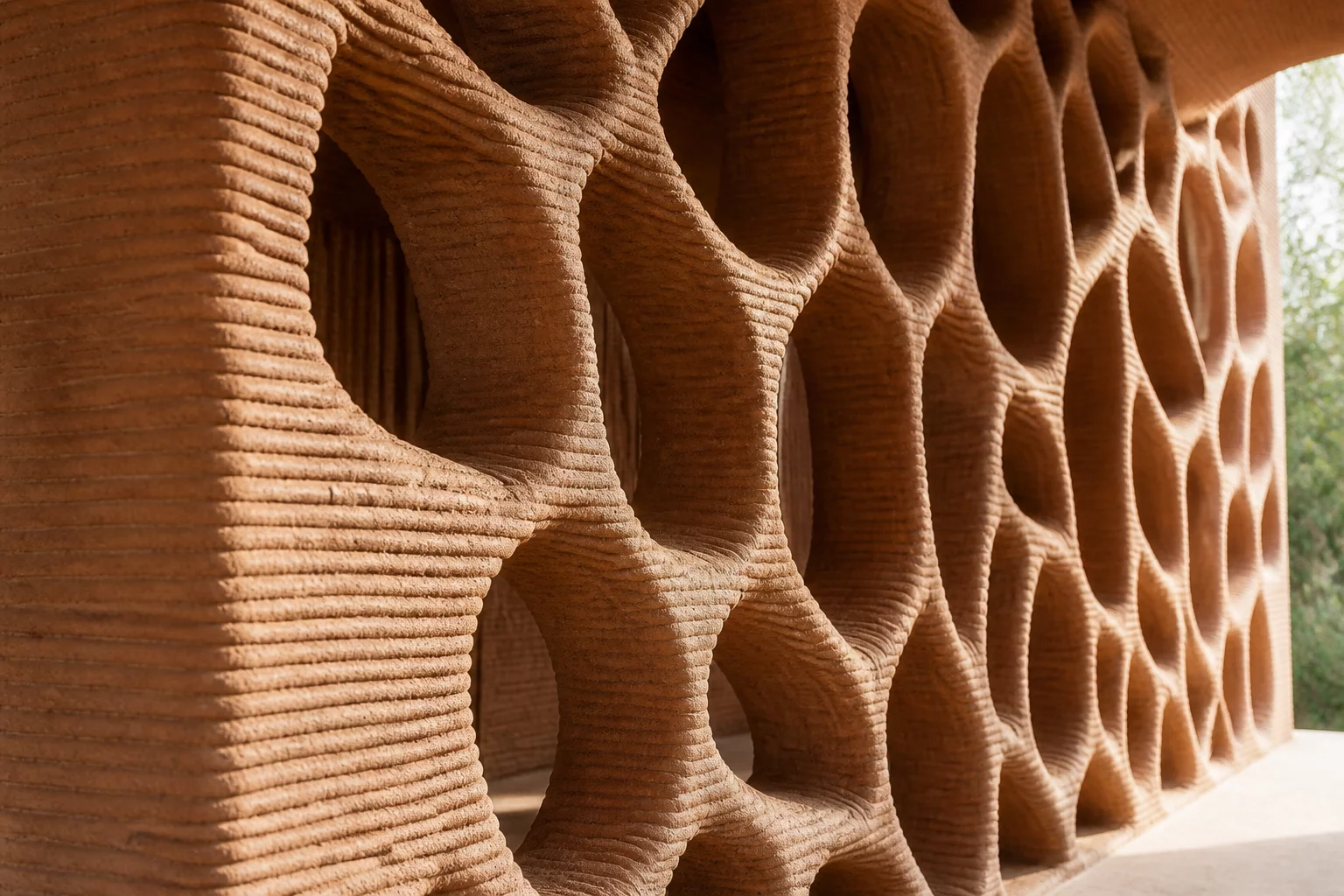
The publication in Nature Communications highlights a significant milestone in sustainable architecture through the use of bio-inspired 3D-printed earthen materials. This research addresses the critical need for low-carbon construction methods by utilizing locally sourced soils and organic geometric patterns to replace energy-intensive concrete structures. By mimicking cellular architectures found in the natural world, engineers have achieved unprecedented structural integrity in extruded clay components.
Engineering Organic Complexity
Researchers focused on the development of voronoi and honeycomb-inspired internal structures. These designs are not merely visual; they maximize load-bearing capacity while drastically reducing the volume of material required. The extrusion process allows for the creation of internal air pockets that naturally enhance thermal insulation properties. Such complexity was previously impossible with traditional earth-building techniques like cob or rammed earth.
Key Technical Advantages
- A 40% reduction in total material weight without compromising vertical compression resistance.
- Integrated thermal management through procedurally generated internal voids.
- Utilizing local soil minimizes transportation emissions and logistics costs.
- Enhanced moisture regulation as the earthen material naturally 'breathes' within the bio-inspired framework.
Overcoming Extrusion Hurdles
The main challenge identified in the paper involves the rheological properties of the earthen paste. To maintain the fine details of bio-inspired patterns, the mixture must exhibit high yield stress after extrusion. Natural additives like plant fibers and specific mineral stabilizers are mixed into the soil to prevent cracking during the rapid drying process. Slicing software had to be adapted specifically for these materials to account for non-uniform shrinkage and ensure the geometric accuracy of the finished build.
"This research proves that the future of housing isn't just about high-tech polymers, but about returning to the earth with advanced geometric logic."
Long-Term Viability
The practical application of this technology could transform housing in developing regions. By combining automated 3D printing with abundant local materials, high-quality, insulated homes can be produced quickly. Future studies will likely focus on scaling these bio-inspired patterns for larger infrastructure projects, such as bridges and multi-story retaining walls, where organic efficiency can provide the greatest economic and environmental benefits.