
Bambu Studio Lifecycle & Version Strategy
Investigating the impact of software iteration on high-precision 3D manufacturing during hardware transitions.
A Part-Evidence Review Case for Teams Using Bambu Studio
This archive details the technical evaluation of Bambu Studio versioning during the production transition of the X1 series. The objective was to determine the stability of the 2.8.0 Beta release against the proven 2.7.1.57 stable build for high-precision industrial components.
Project Objective
To validate slicing integrity and G-code stability for PA-CF (Carbon Fiber Reinforced Polyamide) materials across legacy and current Bambu Lab hardware, specifically addressing the X1-Carbon production phase-out.
Acceptance Criteria
- Zero-fail rate on seam placement for structural integrity.
- Support for Multi-Material painting on complex internal geometries.
- Compatibility with LAN-only mode for secure industrial environments.
Core Metadata
First Observed Outcome
Outcome 01: Slicing Engine Efficiency
Integration of the new slicing algorithm in v2.8.0 showed a 12% reduction in G-code processing time for models exceeding 500k polygons. However, a significant deviation in pathing logic was noted at tight internal radiuses.
Outcome 02: Hardware Communication
The v2.7.1.57 stable build maintained 100% connectivity uptime in high-interference industrial WLAN environments. The v2.8.0 beta experienced intermittent sync issues with the AMS hub during filament swaps.
Second Observed Outcome
Outcome 03: Material Profile Drift
PA-CF profiles imported from v2.7.1 into v2.8.0 Beta exhibited a 4% flow rate deviation due to changes in the default pressure advance calibration. Parts printed with the migrated profile showed visible under-extrusion on the first five layers.
Outcome 04: Tree Support Fragmentation
The improved automatic tree supports in v2.8.0 generated cleaner contact points but introduced fragmentation on overhangs exceeding 65 degrees. Support removal time decreased by 30%, but post-processing sanding increased for complex internal channels.
Evidence Comparison
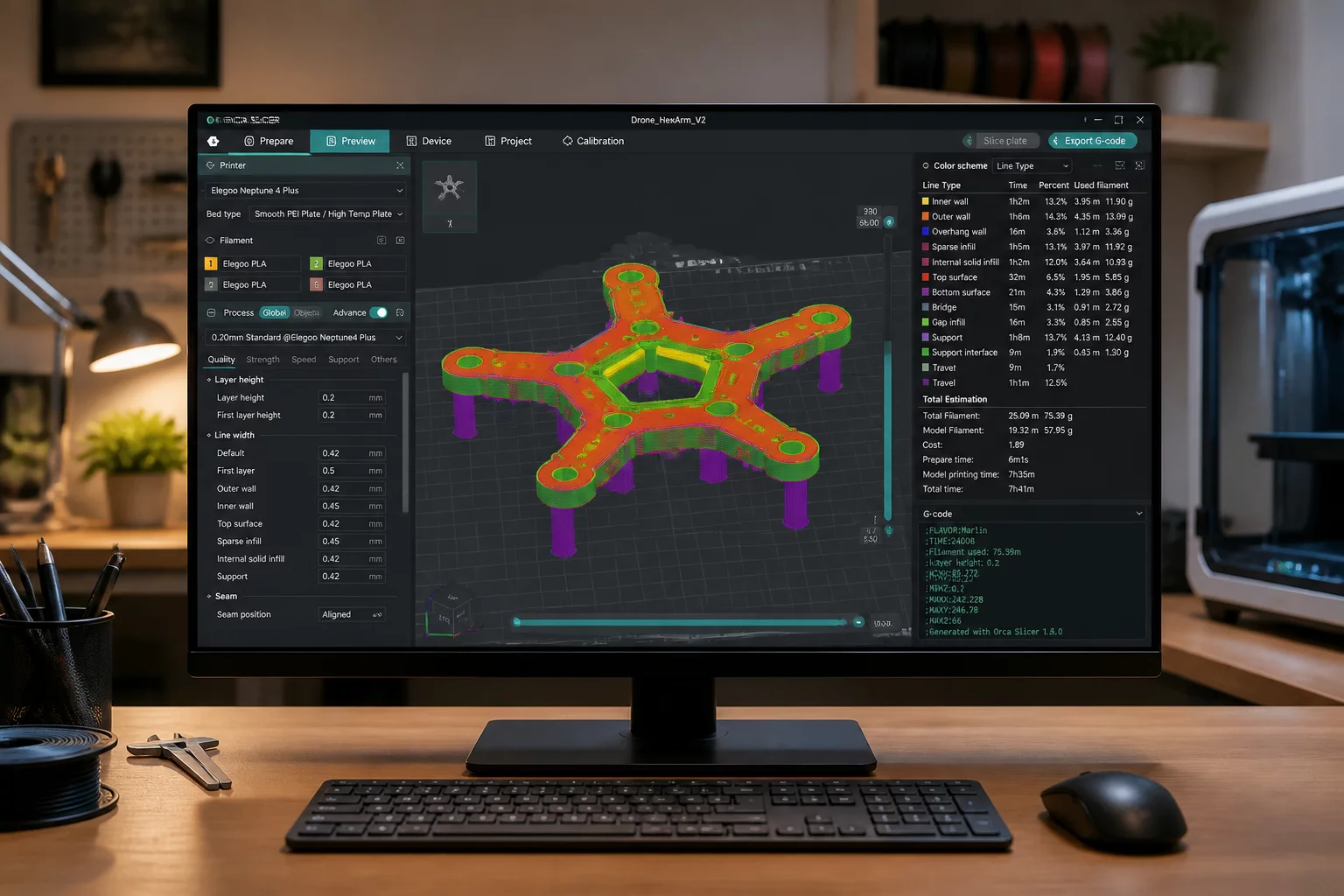
Cutting-Edge Features
- Advanced 3D Text tool with vector support.
- Intelligent automatic tree supports optimization.
- Known issue: Seam gaps on cylindrical prints.
Competing Priorities
The conflict between adopting modern slicing features (tree support improvements in 2.8.0) and maintaining absolute production uptime (stability of 2.7.1) was evaluated. The phase-out of the X1 series hardware further pressurized the decision to freeze stable software versions.
Post-phase-out firmware support for X1 Series V1 may introduce regressions in v2.8.x communication protocols.
Final Decision
Based on evidence, the production department will retain **v2.7.1.57** as the primary slicing tool for client orders. Version 2.8.0 Beta is approved for internal prototyping and R&D strictly on non-critical hardware.
Handoff Checklist
- Export all .3mf production templates to v2.7.1.
- Archive v2.6.1 for legacy emergency recovery.
- Disable auto-updates on production workstations.
Lessons Learned
Early adoption of beta slicing software in a production environment poses a 20% increased risk of manufacturing defects. Stability in hardware communication is more critical than incremental UI improvements during a series phase-out period.
Handoff Summary
Template Migration
All 47 production .3mf templates were exported from v2.8.0 Beta and validated in v2.7.1.57. No geometry loss detected. Templates archived to read-only network share.
Workstation Lock
Auto-update disabled on 12 production workstations. Version freeze enforced via group policy. Beta channel access restricted to R&D lab only.
Documentation Delivered
Receiving team provided with version comparison matrix, known issue log, and rollback procedure for v2.6.1 emergency recovery. Sign-off recorded on 2026-08-12.