
ORNL Wins 2026 SME Aubin Additive Manufacturing Award
Project Overview
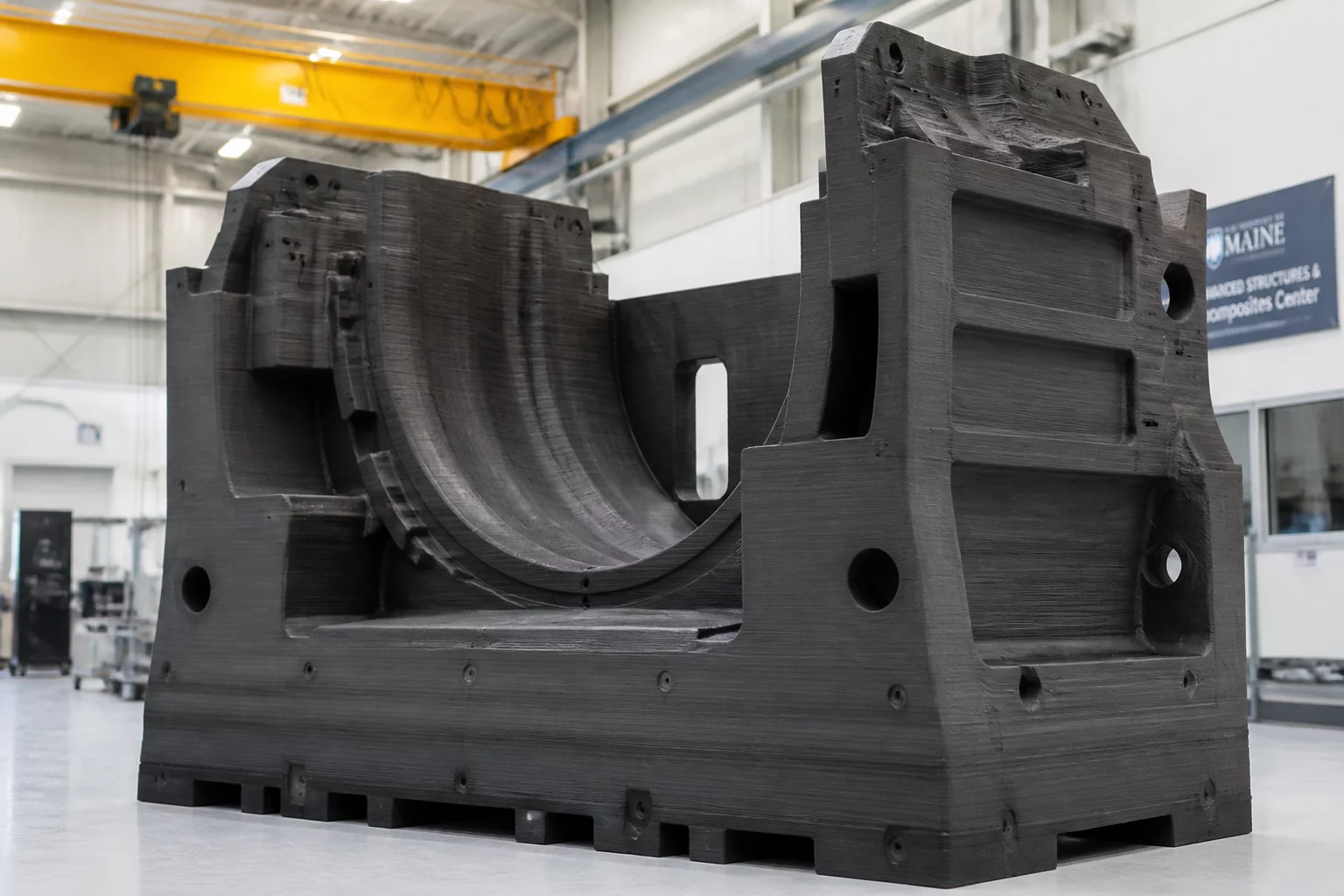
Oak Ridge National Laboratory (ORNL) has received the prestigious 2026 SME Aubin Additive Manufacturing Case Study Award for its pioneering research in large-format printing. The team successfully engineered high-performance composite molds designed for advanced nuclear reactor components. By utilizing high-deposition-rate additive manufacturing methods, the ORNL researchers demonstrated a radical reduction in production timelines—shrinking cycles from several months to just a few days. This breakthrough highlights the immense potential of 3D printing in critical infrastructure development, where precision, speed, and material durability are non-negotiable requirements.
Technical Specifications
- Division:Advanced Manufacturing
- Sector:Energy & Nuclear
- Status:Award Winning
- Revision:2026.Q3
Implementation Process
The implementation centered on the Big Area Additive Manufacturing (BAAM) system to extrude carbon-fiber-reinforced thermoplastics. This process addressed the historical challenges of tooling for nuclear applications, specifically thermal expansion and structural deformation under high pressure. The project involved a collaborative effort across multiple engineering nodes to ensure that the printed molds could withstand the rigorous casting temperatures required for reactor pressure vessels. Localized manufacturing allowed for real-time adjustments to the generative design, ensuring optimal part geometry without the lead time of traditional steel tooling.
Metallurgical analysis and surface integrity tests verified that the composite molds provided sufficient accuracy for the subsequent casting stages. Performance data revealed that waste-to-part ratios were reduced by nearly 60% compared to traditional machining methods. The success of this implementation establishes a new benchmark for additive workflows in highly regulated industrial sectors, proving that thermoplastic composites can replace heavy metallic molds in complex manufacturing environments.
Detailed performance benchmarks indicate a significant reduction in waste-to-part ratios when compared to traditional subtractive methods. The technical implementation follows the industry standard ISO/ASTM 52900 terminology for additive manufacturing, ensuring that the protocols developed at ORNL can be replicated by industrial partners across the globe.