Hadrian Launches Additive Manufacturing Division
Project Overview
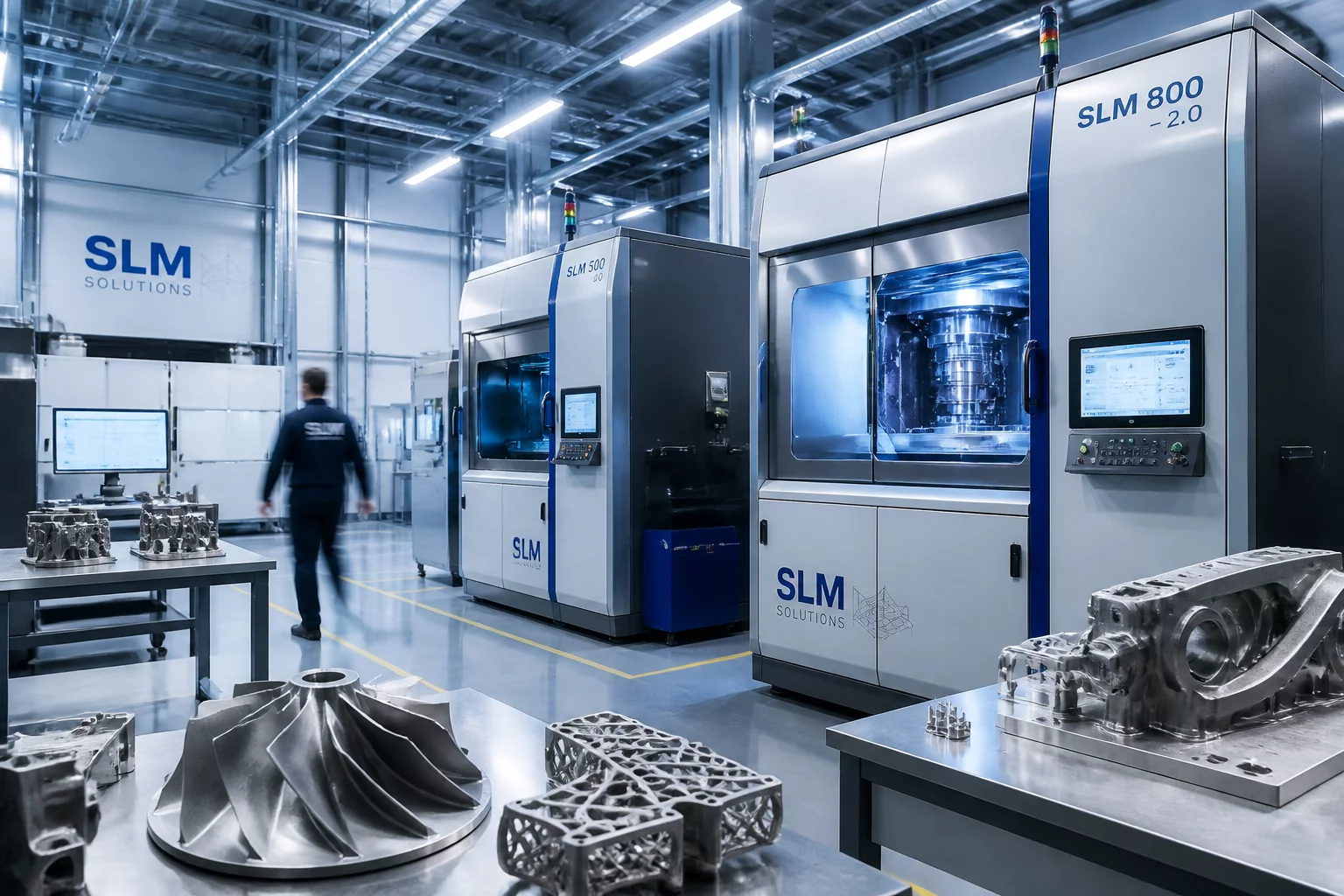
In January 2026, Hadrian officially launched its dedicated Additive Manufacturing (AM) Division, marking a significant milestone in the evolution of autonomous aerospace manufacturing. This specialized unit focuses on accelerating the production of complex flight-critical components that were previously hindered by the lengthy lead times of traditional forging and casting. By leveraging advanced metal powder bed fusion technology, Hadrian aims to provide defense partners with a resilient, high-speed supply chain capable of producing parts in days rather than months. The division is designed to bridge the gap between rapid prototyping and full-scale serial production, ensuring that additive designs are flight-ready and fully certified for immediate deployment in advanced defense programs.
Technical Specifications
- Division:Advanced Manufacturing
- Sector:Aerospace & Defense
- Status:Verified Case
- Revision:2026.Q3
Implementation Process
The integration of additive workflows within Hadrian’s existing industrial framework involves a multi-stage validation protocol. We analyzed the workflow at their primary facility, identifying key efficiency gains in the 'support-free' geometry validation phase. By reducing reliance on sacrificial structures, Hadrian has decreased post-processing labor by nearly 40%. The team uses a proprietary powder recycling system that ensures 98% of unused titanium powder is recovered and re-certified for future flight hardware, significantly lowering the material footprint per component.
Detailed performance benchmarks indicate a massive reduction in waste-to-part ratios when compared to traditional subtractive methods. The technical implementation follows the industry standard ISO/ASTM 52900 terminology for additive manufacturing, with additional proprietary stress-testing cycles developed for high-altitude strike environments. Each part undergoes ultrasonic inspection and high-resolution scanning to ensure zero porosity and exact dimensional adherence to the original CAD specifications.